
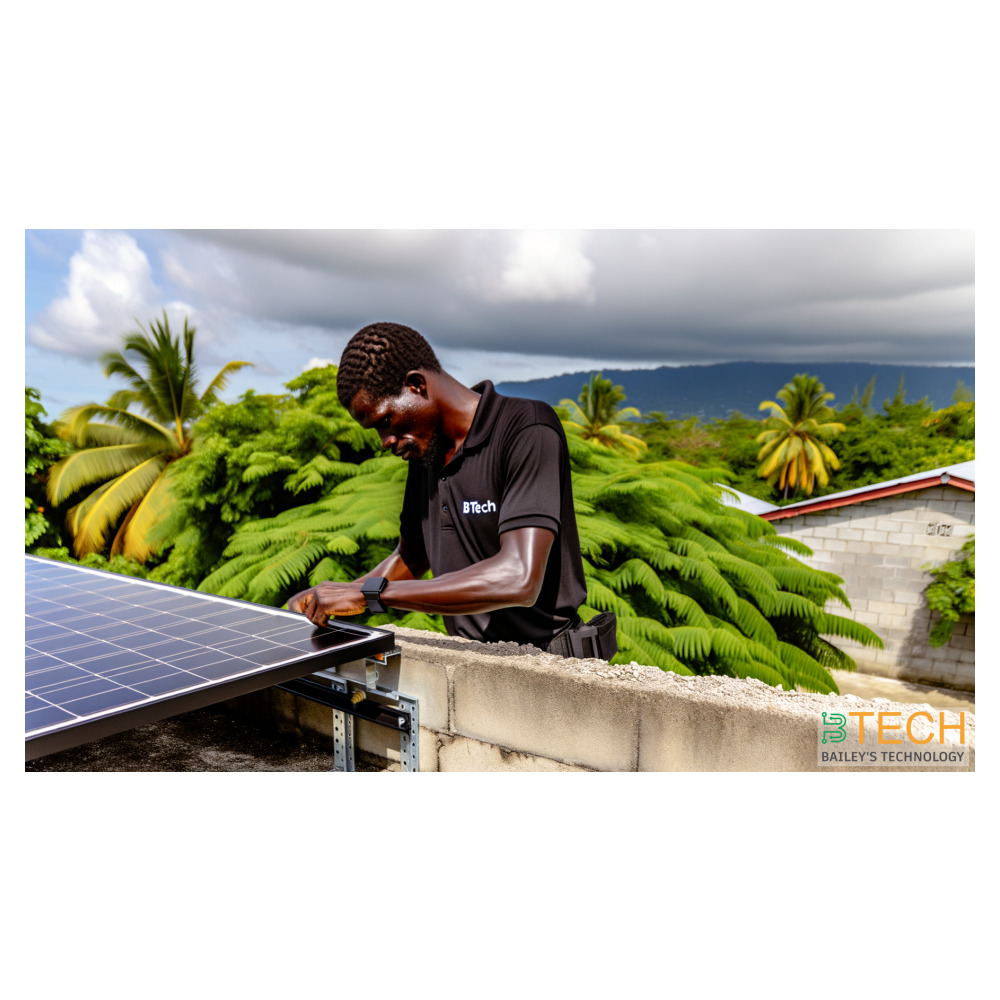
“Hurricane-proof” is a mounting claim, not a panel claim: quality modules are already engineered for severe wind and impact loads — when arrays fail in storms, the failure is almost always the attachment, not the glass.
What panels are built to take
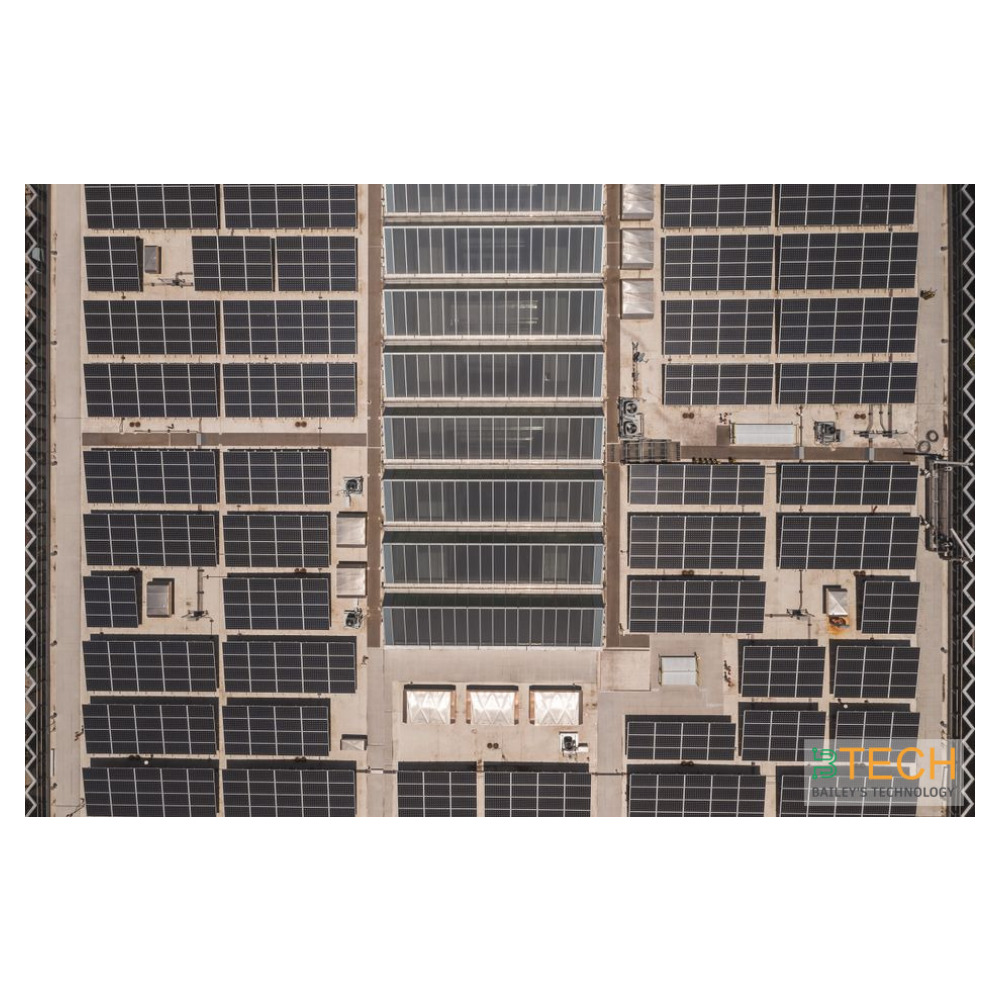
Certified modules carry serious static load ratings for wind and are impact-tested against hail strikes. The 605W bi-facial panels BTECH stocks (J$25,000) use tempered glass and framed construction designed for exactly the weather Jamaica serves.
Where storm failures actually happen
Attachment points into decking instead of structure — uplift peels the array with the screws.
Under-torqued clamps — vibration loosens, then flutter finishes the job.
Edge-zone ignorance — roof corners see multiplied uplift; layouts must respect them.
Corroded coastal hardware — salt eats cheap fasteners years before the storm arrives.
The BTECH storm playbook
Lags into rafters/purlins, S5-style hooks (J$600) on standing-seam metal, engineered rail spans (16ft rails, J$6,000; splices J$450), torque-spec’d clamps (mid J$500, end J$450), stainless near the coast, and edge-zone-aware layouts. This is standard on every installation — storms are not a surprise here.
After the storm
Visual check, torque re-verify, surge-protector inspection (lightning often rides the same weather; J$6,000 to renew). We inspect island-wide: 876-777-5488.
FAQ
Should panels be removed before a hurricane?
No — properly mounted arrays are safest installed; removal cycles create their own failures.
Does insurance cover solar in storms?
Many policies can include it — document your installation and ask your insurer.
Can you storm-harden an existing array?
Yes — torque audit and hardware upgrades are a routine visit.