
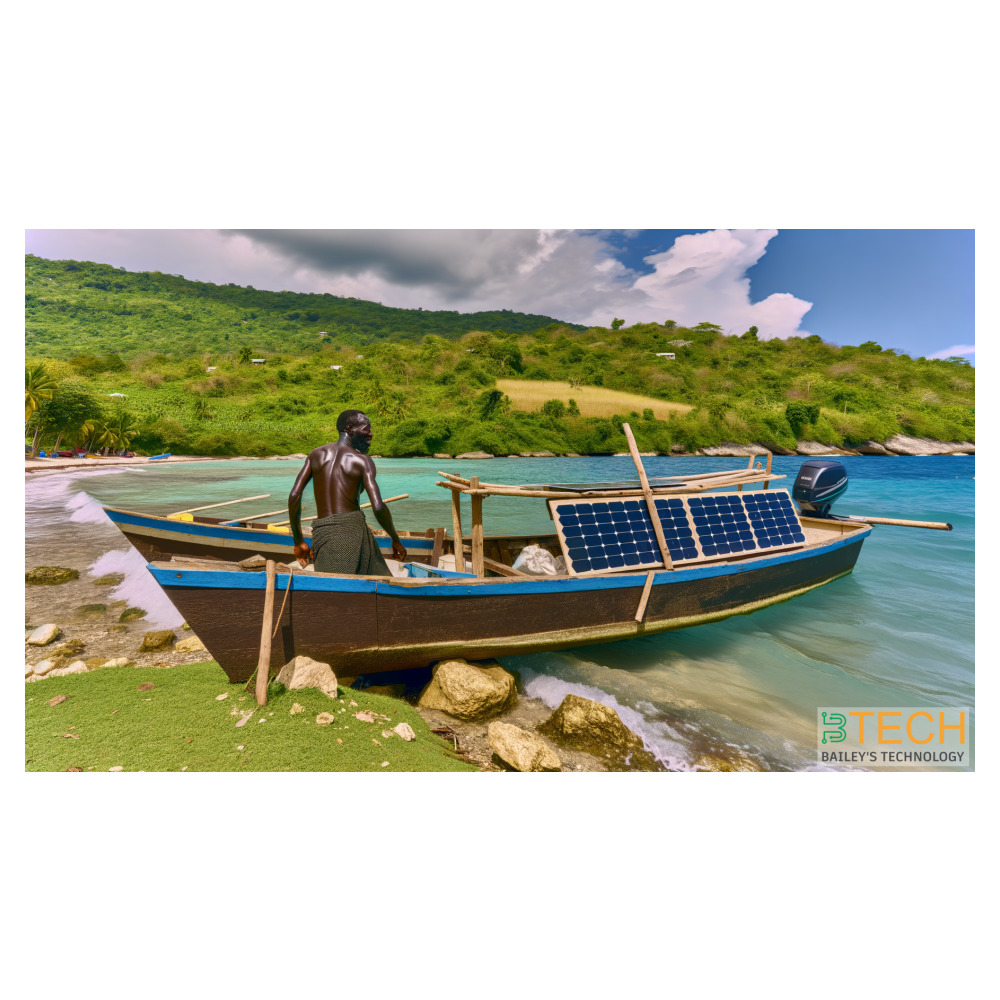
Marine solar runs on the same building blocks as home solar — panels, charge control and lithium storage — with two extra enemies: salt and motion. Here is what transfers directly from land systems, and what boat owners must treat differently.
What transfers from home solar
The electrical fundamentals are identical: PV cable sized for current, MC4 connectors, correct fusing and breakers, and lithium batteries with proper charge control. BTECH stocks these components — the same connectors, breakers, cable and fuses used on rooftops serve tenders, fishing boats and yachts at anchor.
What the sea changes
Corrosion. Marine installs need stainless hardware, dielectric grease on connections and drip loops on every cable run.
Mounting. Rigid rooftop rails give way to deck mounts and canvas-top flexible panels that tolerate curvature and vibration.
Sizing honesty. On the water there is no grid fallback: fridge, nav electronics, bilge pumps and lighting must fit within real daily production, with cloudy-day margin.
A practical Jamaican approach
Audit your onboard loads, size storage for a full night plus reserve, and buy components locally so replacements are a drive away rather than a freight shipment. BTECH’s Ocho Rios store carries panels, charge controllers, lithium batteries, cable, fuses and connectors over the counter — call 876-777-5488 with your parts list.
FAQ
Does BTECH install marine solar systems?
Our installation teams focus on land systems; for vessels we supply components and advise on system design for your marine electrician.
Will regular solar panels survive at sea?
Quality glass panels handle spray, but mounting hardware must be marine-grade — that is where most corrosion failures start.
Which battery is best onboard?
Sealed lithium — no acid, no fumes, high cycle life and tolerant of motion.