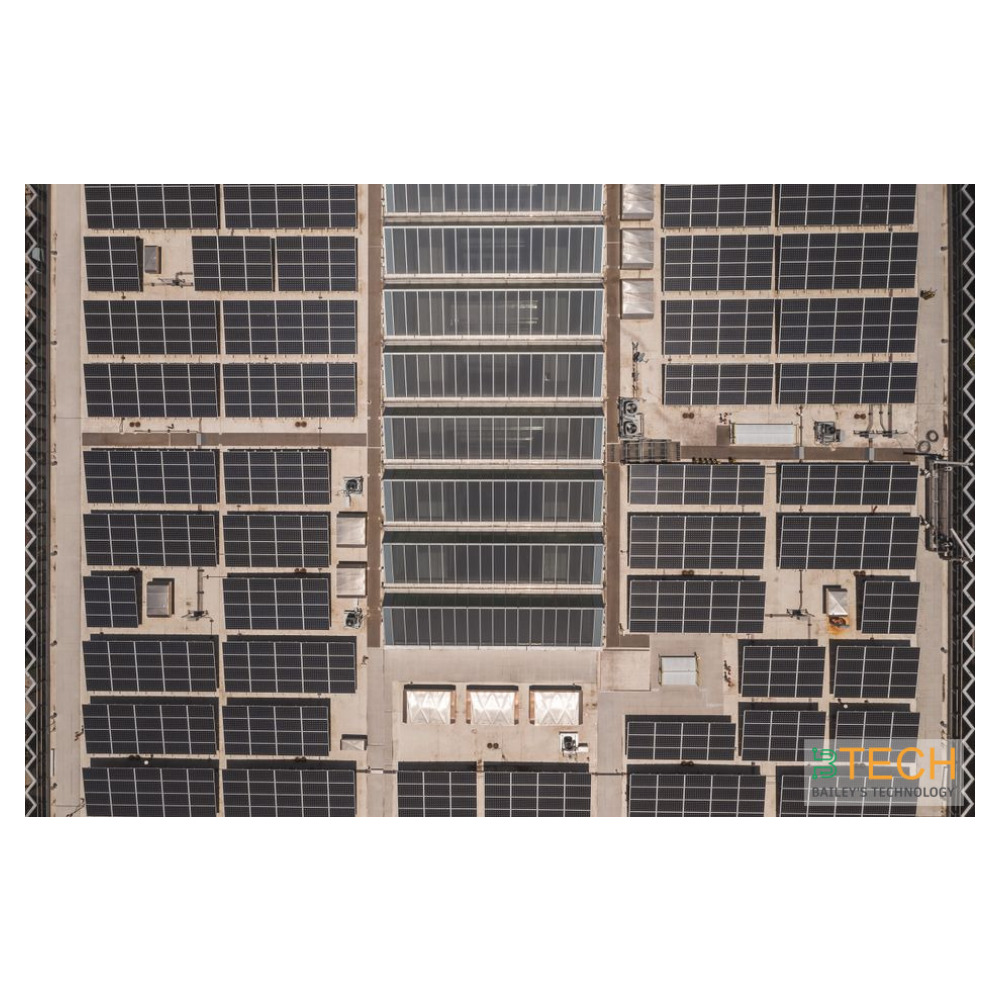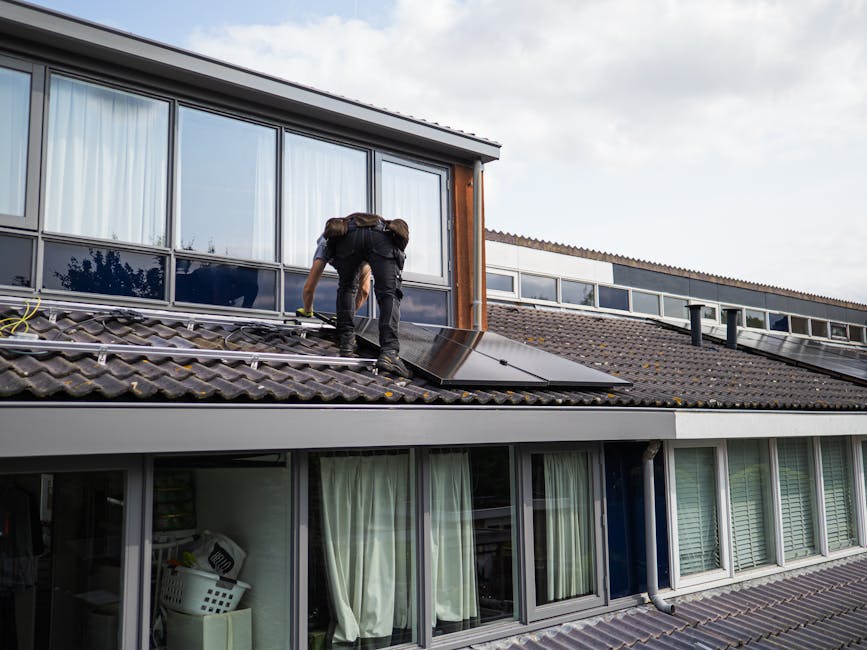

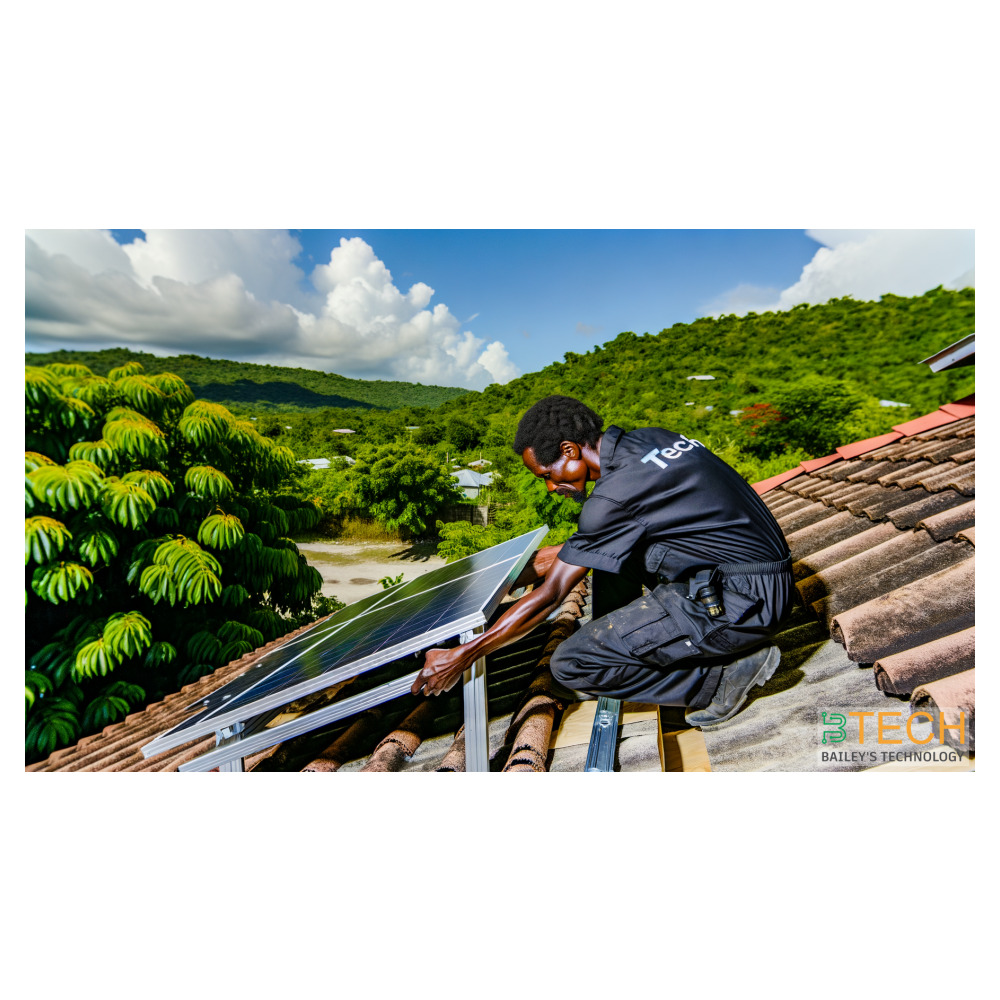
Wind does not push panels off roofs — it lifts them, like an aircraft wing. Wind-resistant mounting is the engineering answer to uplift: structure-anchored feet, correctly spanned rails, torque-spec’d clamps and layouts that respect where suction concentrates.
Understanding uplift
Air accelerating over a roof creates suction above panels, strongest at corners, edges and ridges — the “edge zones.” A panel field that ignores them loads its weakest screws with its strongest forces. Layout discipline is free; ignoring it is not.
The hardware chain, rated end to end
Panel frame → clamps (mid J$500 / end J$450, torqued to spec) → rail (16ft, J$6,000, spans engineered) → foot (L-feet J$700, or S5 hooks J$600 on standing seam) → structure (rafter/purlin, never decking alone). A chain is its weakest link — every link here is chosen, priced and stocked at BTECH.
Tilt and rear legs
Flat-roof arrays on adjustable rear legs (J$3,000) gain production but present more sail — their attachment counts double. Our layouts balance tilt gain against wind exposure by location.
Set-and-verify culture
Torque marks at installation, re-verification after the first months, and post-storm checks. Hardware is cheap; discipline is the actual product.
FAQ
What wind speeds can a proper install take?
Quality modules carry severe static load certifications; correctly attached arrays are designed to ride out hurricane conditions — attachment quality is the deciding variable.
Is zinc roofing compatible?
Yes — standing seam via S5 hooks; corrugated via purlin-anchored brackets.
Who checks my existing mounting?
BTECH audits island-wide: 876-777-5488.