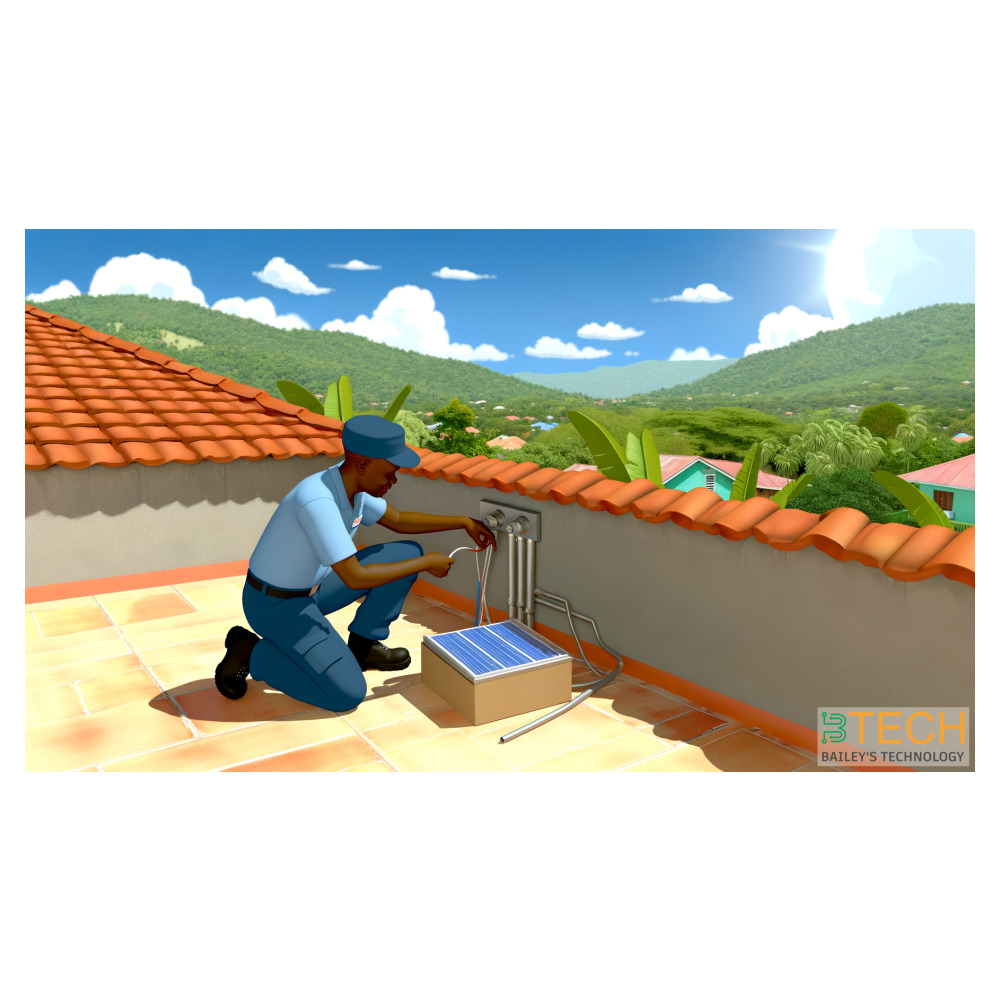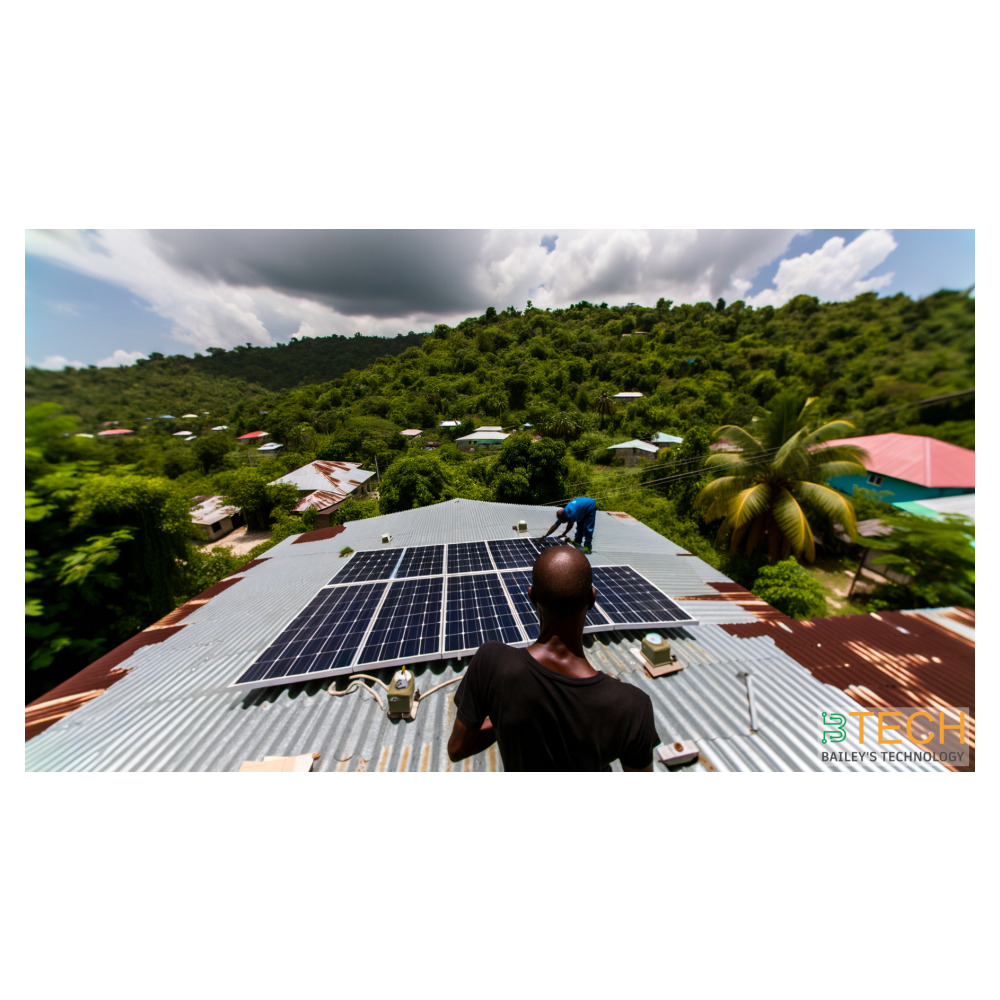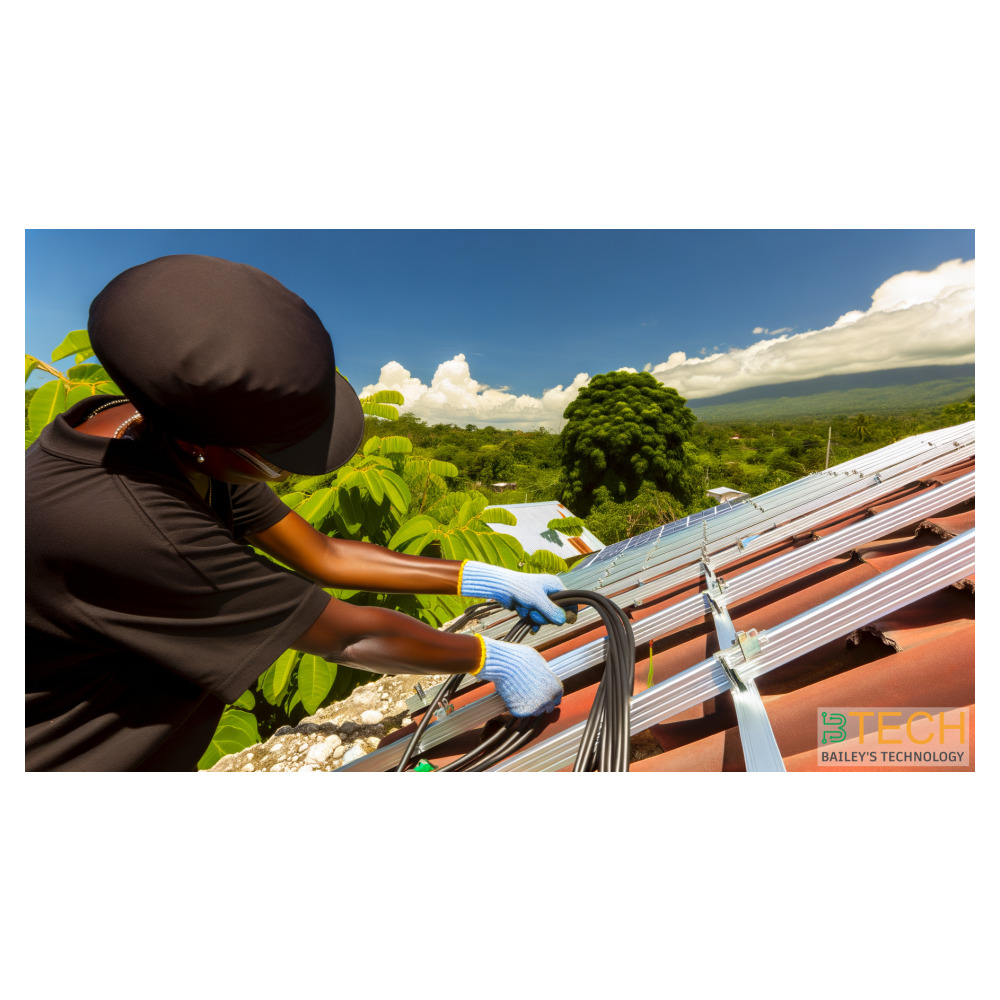

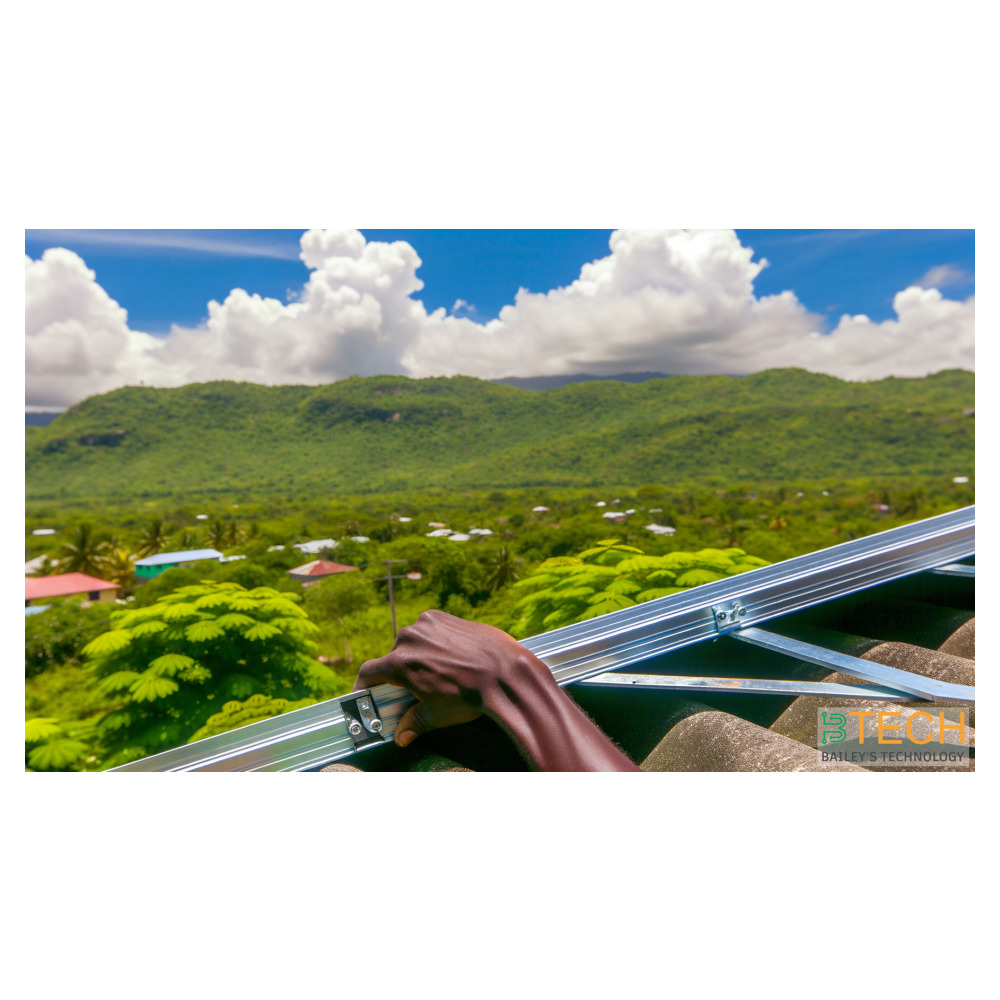
In hurricane country, mounting is not an accessory — it is the difference between a solar array and airborne debris. The proper stack costs surprisingly little: 16ft rails at J$6,000, mid clamps J$500, end clamps J$450, L-feet J$700 — all stocked at BTECH.
The mounting stack, bottom to top
Attachment: L-feet (J$700) lagged into rafters — never just decking — or S5 hooks (J$600) clamping standing-seam metal roofs without a single hole. Adjustable rear legs (J$3,000) tilt arrays on flat roofs.
Rails: 16ft aluminum (J$6,000), joined with rail splices (J$450), sized so spans match the roof structure.
Panel capture: mid clamps (J$500) between panels, end clamps (J$450) at row ends — torqued to spec, because under-torqued clamps loosen in vibration and over-torqued ones crack frames.
Storm-season discipline
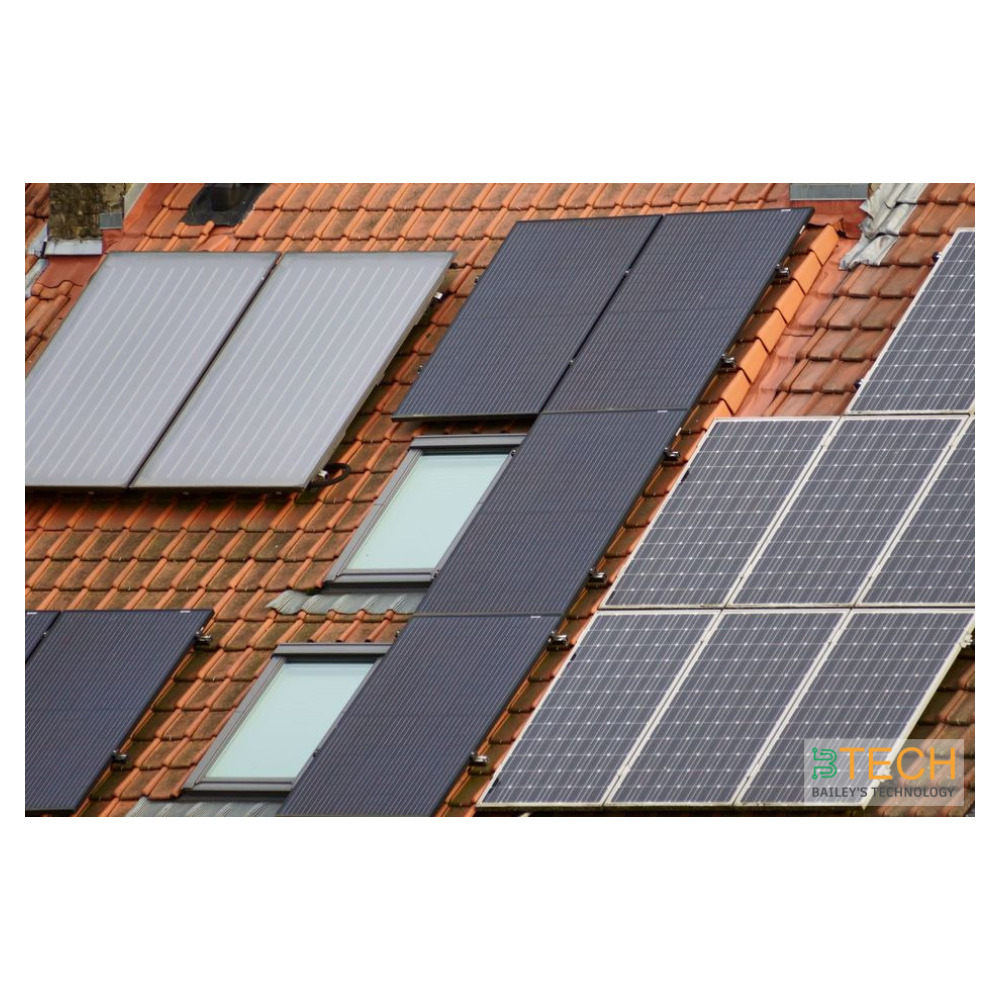
Panels themselves are engineered for serious wind and impact loads; arrays fail at lazy attachment points. The rules: hit structure (rafters, purlins), respect edge zones where wind uplift concentrates, use stainless hardware near the coast, and re-check torque after the first months. Every BTECH installation follows this playbook — it is why our gallery is full of arrays that have already met weather.
FAQ
Can panels mount on zinc roofs?
Yes — standing-seam zinc takes S5-style hooks (no penetrations); corrugated zinc uses appropriate brackets into purlins.
What does mounting cost for a typical home array?
Commonly J$60,000–J$120,000 in hardware for 6–10 panels — quoted exactly with your system.
Do you sell mounting separately?
Yes, over the counter and at btechj.com/shop. Advice free: 876-777-5488.